A catalog built as a calendar
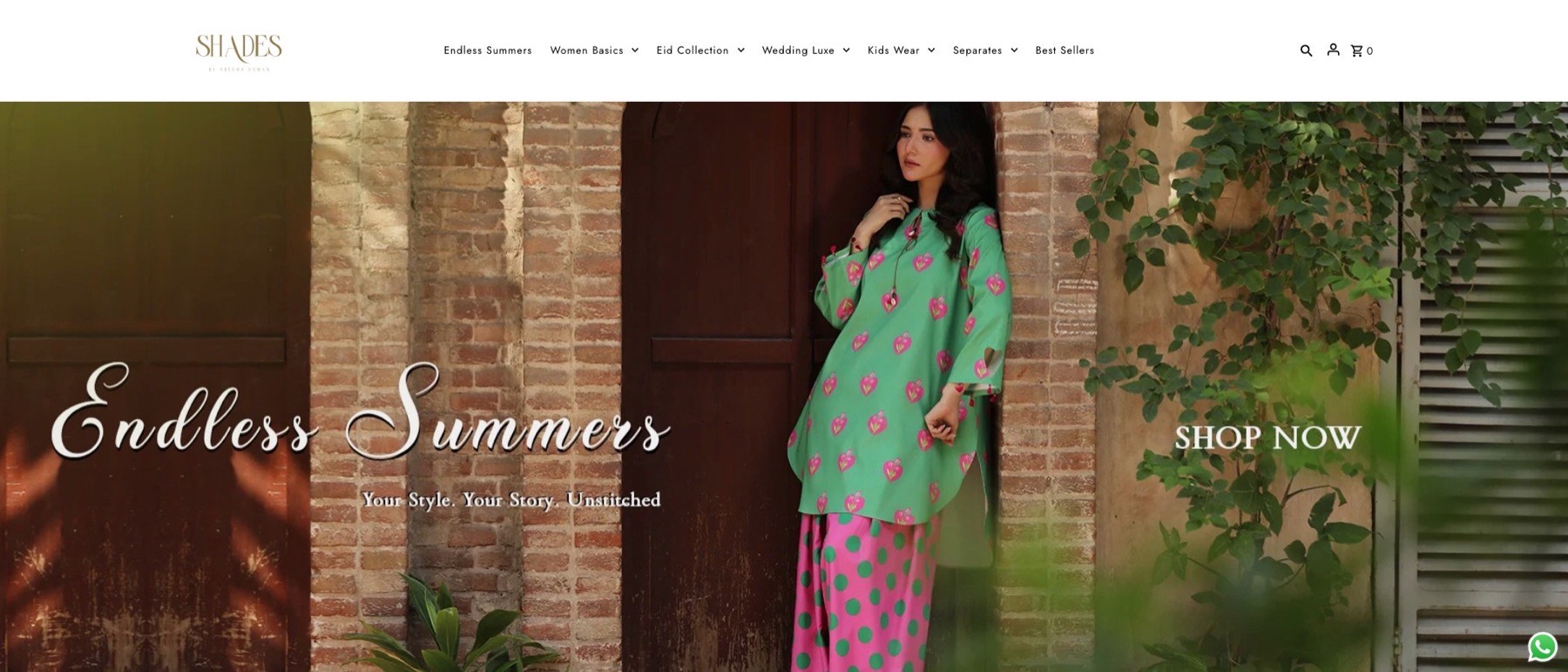
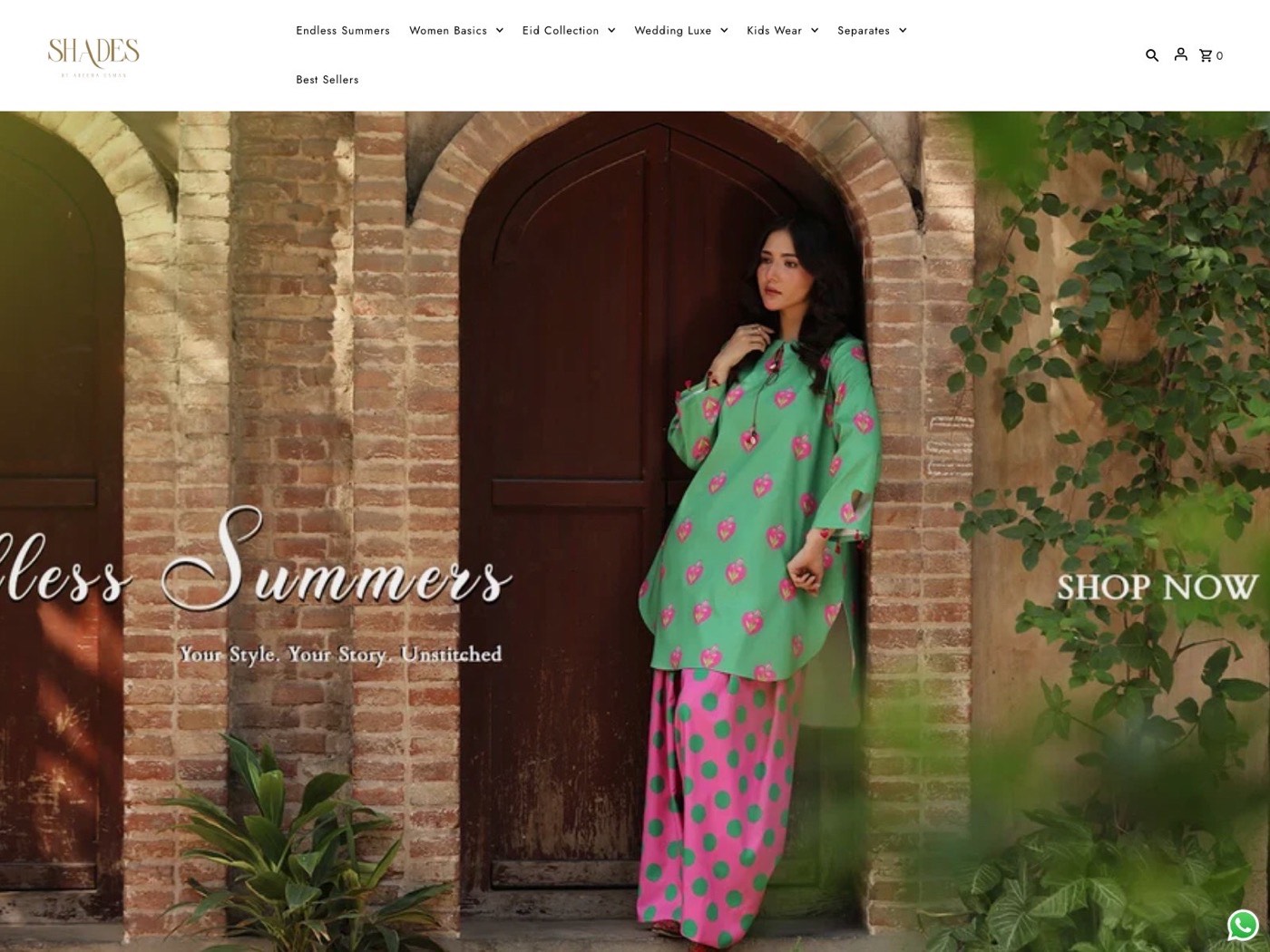
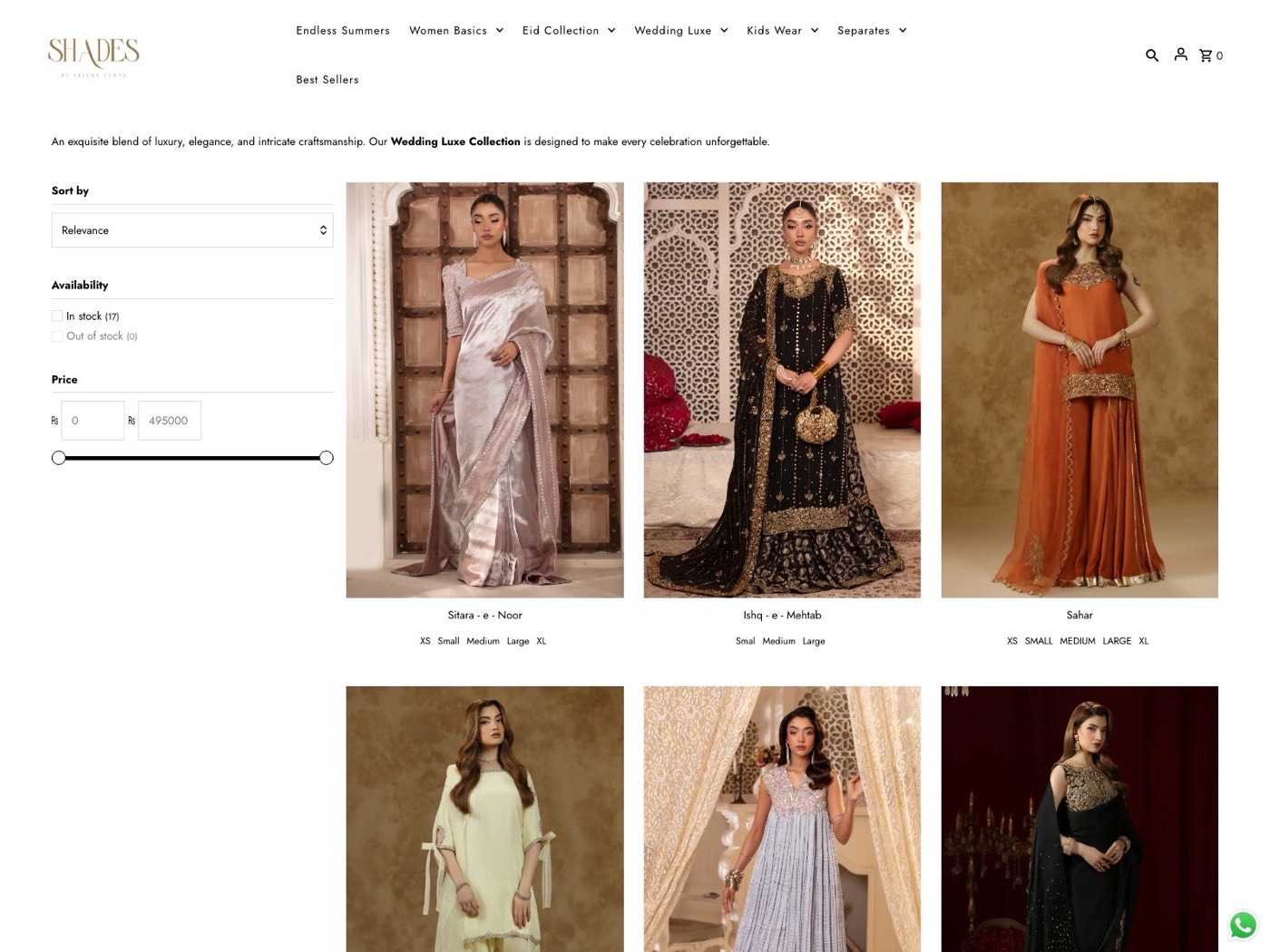
22 collections grouped into six routes — Endless Summers, Women Basics, Eid, Wedding Luxe, Kids and Separates — so a shopper lands in the right season rather than the whole archive.
Case studies · Fashion e-commerce
A Lahore fashion label that sold offline, put online in a month — 22 collections across pret, bridal, Eid and kids, with pre-orders, combined size listings and WhatsApp support wired into the buying flow.
The problem
Shades was already a real business before it was a website. The label sold in person — the collections existed, the customers existed, and none of it was reachable by anyone who could not walk in. The job was not to launch a brand. It was to put a working shop online without losing what already made it work.
A fashion label does not have one catalog, it has a calendar. Pret runs all year, Eid arrives twice and doubles the traffic, wedding season needs its own aisle, and kids sits alongside all of it. Put that on a template and the customer meets a wall of product with no idea which season she is standing in.
The store also had to sell the way its customers actually buy: pieces that come in several sizes and colors listed as one product rather than five, stock that can be taken as a pre-order rather than a lost sale, and a question answerable on WhatsApp in the middle of the buying decision instead of a contact form nobody fills in.
The work
22 collections grouped into six routes — Endless Summers, Women Basics, Eid, Wedding Luxe, Kids and Separates — so a shopper lands in the right season rather than the whole archive.
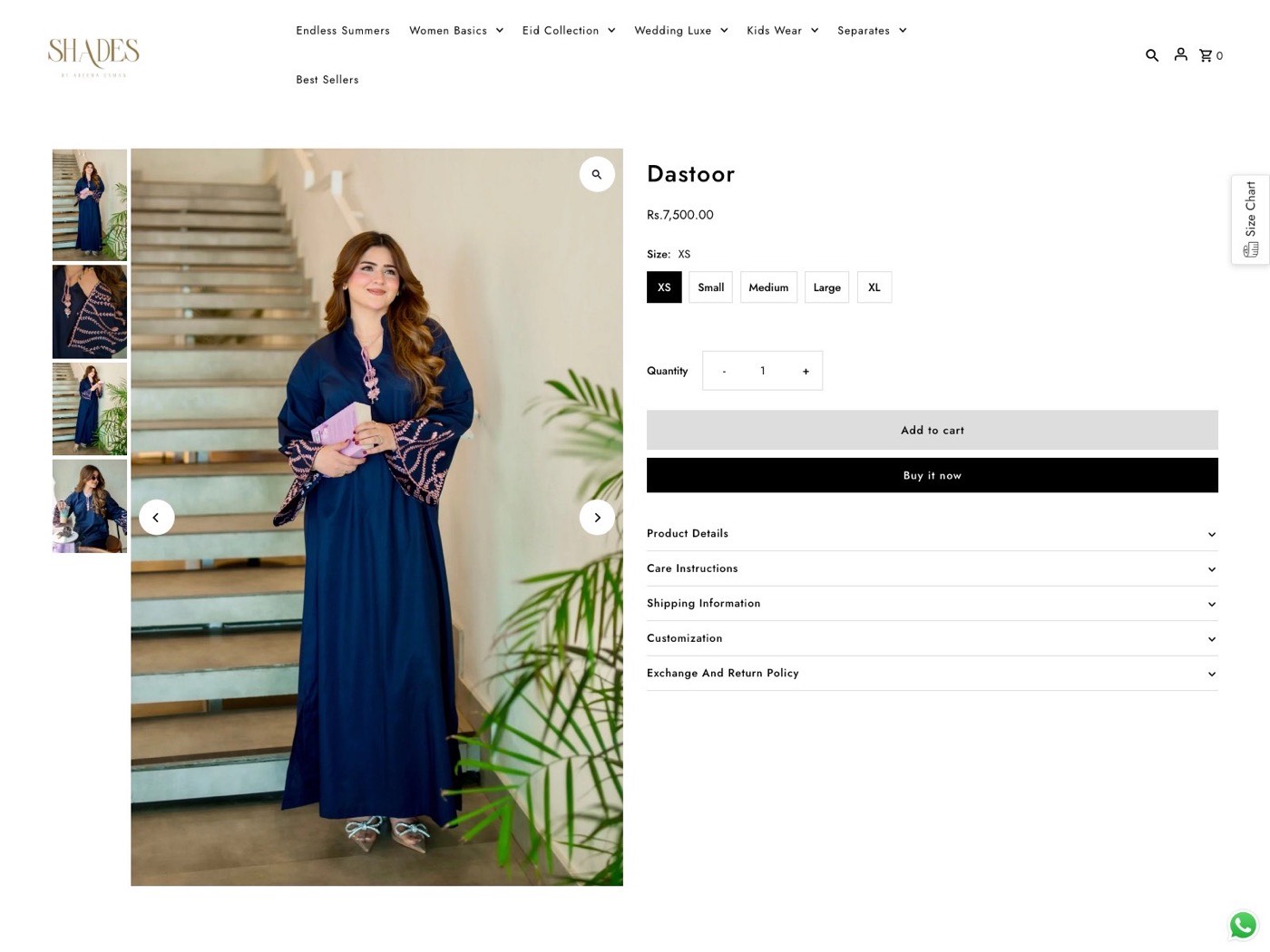
One product page holding every size and colorway, so a piece is one decision instead of five near-identical results in a grid.
Sold-out pieces take an order instead of showing a dead button — the sale survives the stock.
Chat sits on every page, because the question that stops a sale is usually about fit or delivery and is asked in the same minute it is thought.
Dupattas and bottoms offered against the piece being bought, where the combination is the actual outfit.
Priced and settled in PKR, with shipping, exchange and return policies written into the flow rather than buried in a footer.
Gallery
Process
Season, occasion and category agreed before a single collection was built.
Collections, tags and the size model set up so the catalog stays navigable at 22 and at 50.
Pre-orders, combined listings and WhatsApp chosen against how the label already took orders.
The team adds a collection, a drop or a price change without calling us.
Outcome
We were selling the same clothes to whoever walked in. A month after the store went live we were selling twice as much, to people who had never been to the shop — and a third of them come back. The site did not change the clothes. It changed how many people could reach them.
Usman, Owner, Shades by Abeeha Usman
Stack
Thirty minutes on your process. We'll tell you what we'd build first and what we'd leave alone.
Book the call→Or email hello@devjunction.co